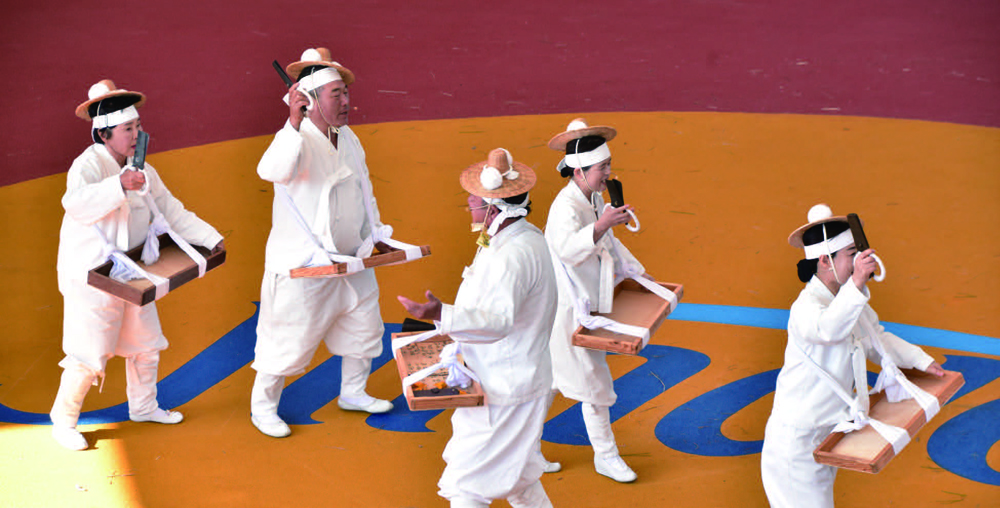
‘엿타령’은
전통적으로 엿을 팔던 장돌뱅이들이 부르던 민요로, 진도
지역에서 특히 생생하게 전승되어 온노래입니다.
일상
속 유머와 장사꾼들의 호객 소리를 담아낸 작업요 형태의 민요로,
지역
사람들의 삶과 정서를
생동감 있게 보여줍니다. 진도에서는
엿 장수의 모습을 재현하는 장면 연출과 함께 공연되어 볼거리와
흥을 더합니다. 전국적으로
존재했던 엿타령 중 많은 부분이 사라졌지만, 진도
엿타령은 비교적 온전하게
보존되어 지역 민속예술의 중요한 자산으로 평가됩니다. 이러한
전통은 지금도 지역 예술인들을 통해
꾸준히 전승되고 있습니다.
-
Yeot
Taryeong (A folk song about yeot)
“Yeot
Taryeong” is a traditional folk song from Jindo Island, originally sung by
peddlers as they sold
yeot, a traditional Korean taffy-like sweet. As a work song, it captures the
humor, rhythm, and storytelling
of everyday life in the region. The Jindo version is especially cherished for
its lively lyrics
and strong ties to local folk traditions. In performances, artists often
recreate the atmosphere of
street vendors, adding theatrical elements to the song. While Yeot Taryeong
once spread widely across
Korea, much of its lyrical tradition has faded elsewhere. In Jindo, however,
the song has been actively
preserved and carried forward as an expression of the island’s rich cultural
heritage.